Cyber incidents
Ransomware, compromised accounts, malware, and unauthorized access.

Security & resilience
Backups are important. A tested recovery plan is what helps your business get back to work.
Schedule a Continuity ReviewPlan beyond the outage
A failed server, ransomware event, cloud-account compromise, or extended internet outage can affect every part of your business. We help you identify what matters most, protect it appropriately, and test the steps needed to restore operations.
Your plan should match your business—not just the backup product you happen to use.
Ransomware, compromised accounts, malware, and unauthorized access.
Server, workstation, storage, network, power, and connectivity failures.
Accidental deletion, account lockout, service interruption, and vendor dependency.
Remote-work continuity, facility issues, severe weather, and vendor outages.
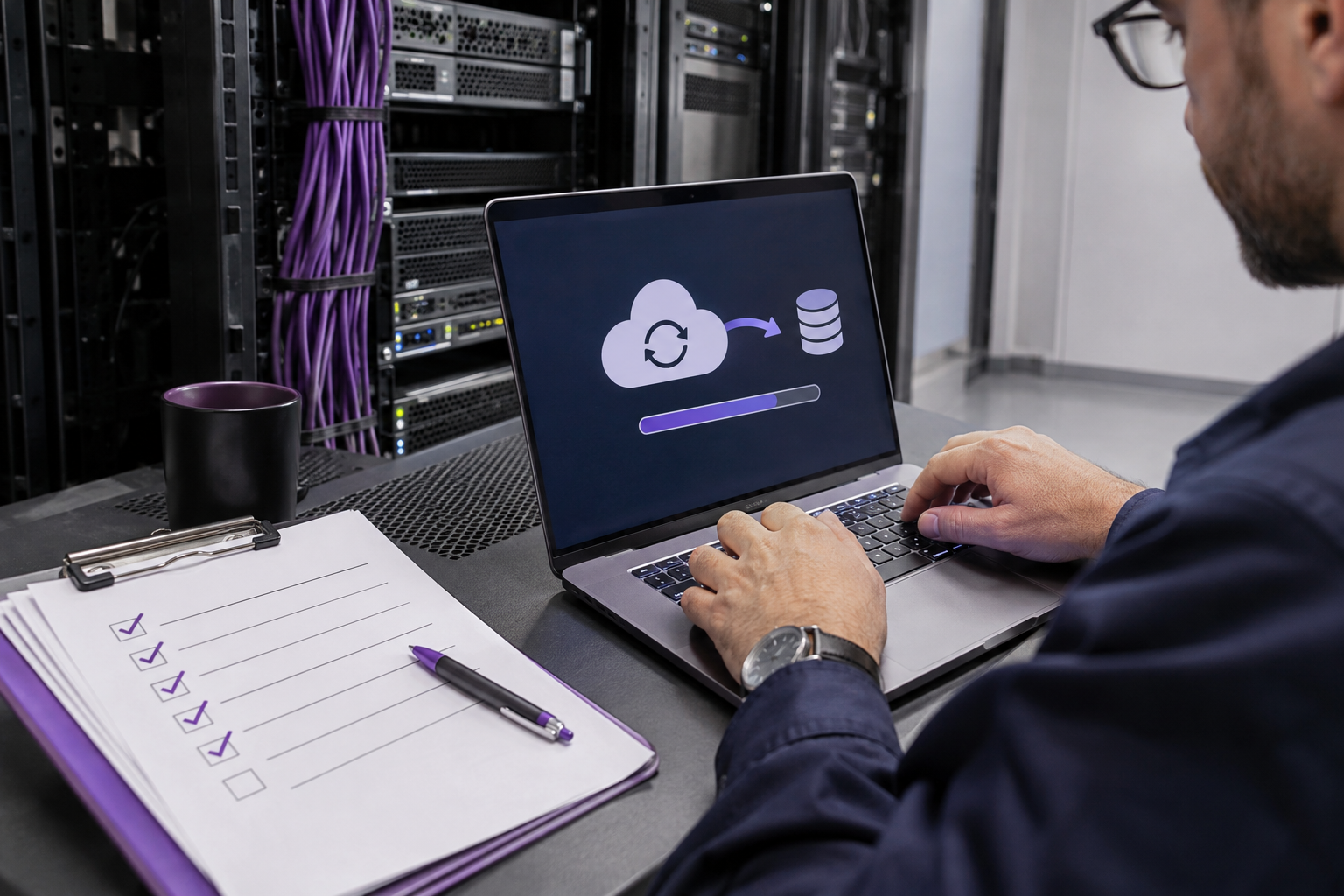
A practical recovery process
No. Cloud storage can provide availability and collaboration, but a complete backup strategy also considers retention, recovery points, access protection, and restoration testing.
Testing should reflect the importance of the system and the risk of change. Critical recovery procedures should be verified regularly rather than assumed to work.
Recovery Point Objective describes how much data loss is acceptable. Recovery Time Objective describes how long a system can be unavailable. Both help determine the right protection plan.